
I’m going to tell you something that most people hiring Filipino remote workers either don’t know or choose to ignore.
The same work ethic that makes Filipino professionals so valuable is also quietly destroying them. And if you’re employing these workers, this problem will eventually become yours too.
I’m not here to guilt you or preach. I’m here to show you what’s actually happening behind the scenes when you hire someone in the Philippines, because understanding this changes everything about how you build and manage remote teams.
Why Filipino Remote Workers Take Multiple Jobs
Between 2019 and 2024, freelance earnings in the Philippines jumped significantly as the online gig economy expanded. According to the Philippine Institute for Development Studies, this growth brought more opportunities and income potential for remote workers.
However PIDS also found that most online workers remain outside formal labor laws. For the most part has no healthcare, no paid leaves and no safety net.
As of 2025, 46% of working Filipinos now hold more than one job simultaneously. The term for this is “polyworking,”.Gen Z workers in the Philippines have especially embraced this model due to low wages and the rising cost of living.”
When the average wage is ₱84.61 per hour and rent in Manila keeps climbing, one job just doesn’t cut it anymore. So people work two, three, sometimes four different roles.
Mental Health Statistics for Filipino Workers
87% of Filipino workers report at least one work-related mental health symptom. According to research reported by the Philippine Daily Inquirer, symptoms include anxiety, chronic fatigue, loss of confidence, or burnout.
Put that in perspective. If you have a team of ten Filipino remote workers right now, approximately nine of them are dealing with work-related mental health issues.
That number sits 11% higher than the global average. The Philippines ranks among the highest globally for workplace stress and mental health challenges.
But here’s what makes everything seem harder. Mental health remains heavily stigmatized in Filipino culture. Psychology experts note that many workers associate rest with laziness or ingratitude.
The Physical Toll That Nobody Sees
Sitting for 60-hour a week destroys your body in more ways than you can imagine. Research links extended work hours directly to higher rates of heart disease, weight gain, Type 2 diabetes, and hormone imbalances.
Lack of sleep impairs cognitive function too aside from disrupting your body’s circadian rhythms. Poor sleep also messes with your emotional regulation often leading to conflicts and disputes with your loved ones.
But here’s a brutal irony. All that extra work and long hours make people less productive over time. Someone working 80 hours weekly gets less actual work done than they would working 40 focused, rested hours.
Why You Should Pay Filipino Remote Workers Fairly
This is going to be uncomfortable, but it needs to be said. A lot of businesses hire Filipino remote workers specifically because they’re less expensive than domestic talent.
But there’s a difference between paying market rates for the Philippines and exploiting the fact that someone will work for less because they have no other options.
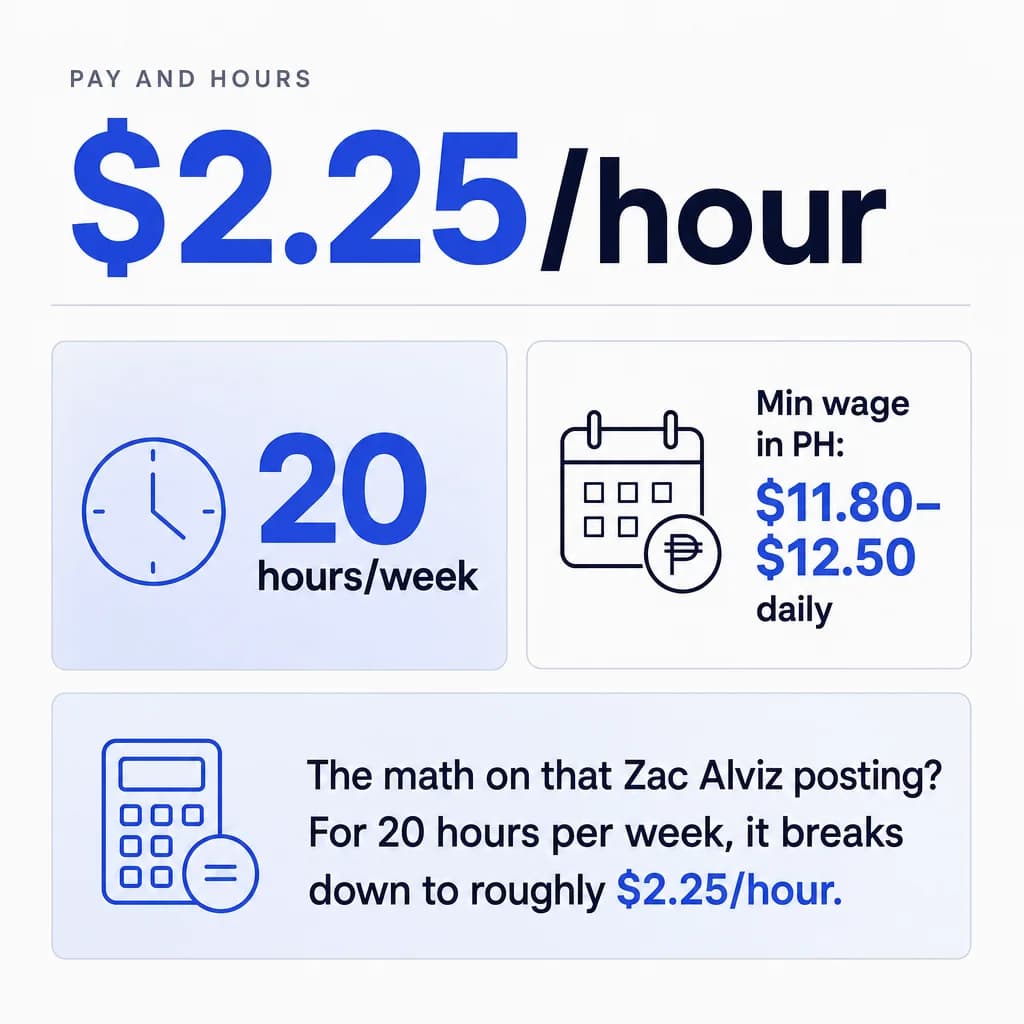
If you’re hiring someone at ₱84.61 per hour (about $1.50 USD) and expecting full-time, skilled work, you’re contributing to the problem.
That wage might be average in the Philippines, but it’s not enough to live on without side gigs, which means you’re guaranteeing that your worker will be distracted, stressed, and likely to burn out.
Fair compensation in this context means paying enough that your worker doesn’t need to juggle multiple clients.
Build Filipino Talent With HireTalent.PH
The Filipino workforce brings phenomenal talent, deep work ethic, and genuine dedication. But talent without sustainability collapses eventually.
Hire Filipino Talent the Right Way Stop wasting time sorting through unqualified candidates or overpaying for talent you could find in the Philippines.
HireTalent.ph connects you directly with Filipino professionals with reviewed profiles ready to contribute from day one.
Frequently Asked Questions
What is hustle culture and how does it affect Filipino workers?
Hustle culture is the belief that constant work and productivity define your worth. For Filipino workers, this mindset combines with cultural values like sacrificing for one’s family and economic necessity.
Why do Filipino remote workers take on multiple clients?
Average wages in the Philippines is at ₱84.61 per hour (approximately $1.50 USD) and rising living costs may mean that income from one single client could not be enough to cover basic expenses like rent, food, and family obligations.
What are the mental and physical health impacts of overwork on Filipino professionals?
87% of Filipino workers experience work-related mental health symptoms including anxiety, chronic fatigue, loss of confidence, or burnout. Mental health stigma in Filipino culture prevents workers from seeking help, as rest is often associated with laziness or ingratitude.