
I’m going to tell you something most hiring articles won’t.
The Philippines has quietly become one of the best places to find AI engineers. Not “virtual assistants who dabble in ChatGPT.”
In fact, The Philippine government estimates 11.3 million Filipinos worked in the digital economy in 2024, with a target of 19.3 million by 2028.
This isn’t a small talent pool.
It’s actual engineers building machine learning models, deploying cloud infrastructure, and working with the latest AI frameworks.
But understanding these distinctions prevents you from expecting a senior ML engineer at VA prices. Here’s how to find and hire Filipino AI engineers.
Are You Looking to Hire in the Philippines and Unsure Where to Start?
Sign up for an account and recruit your next employee within minutes!
Get StartedFair Compensation Ranges
General software engineers in the Philippines earn about $720-800/month in local roles. Remote Filipino software engineers working for foreign employers average $41,000/year.
AI-specific roles command a premium above general dev roles.
AI engineers working on product workflows should understand where agents can safely automate tedious release work. This guide to OpenAI Codex app screenshot workflows is a useful example of keeping generation structured and human-approved.
Junior/AI-adjacent roles (data annotation, basic analysis, prompt work) run $5-10/hour when hired directly, or $15-25/hour through agencies.
Mid-level AI engineers (Python, ML libraries, LLM tooling) cost $2,000-3,500/month for full-time remote work through direct hiring. Agency benchmarks put hourly rates at $25-45/hour locally, rising to $35-60/hour for international remote engagements.
Senior AI engineers (NLP, computer vision, LLM infrastructure) command $3,500-6,000+/month, or $45-70/hour locally and $60-90+/hour for international remote work. Top-end packages exceed $86,000/year for senior remote ML engineers serving global clients.
For context, fair VA rates start at $6/hour (roughly $1,000/month). A genuine AI engineer should not be expected at the same or lower rate.
Where to Find Filipino AI Engineers
HireTalent.ph gives you direct access to reviewed Filipino AI engineer profiles
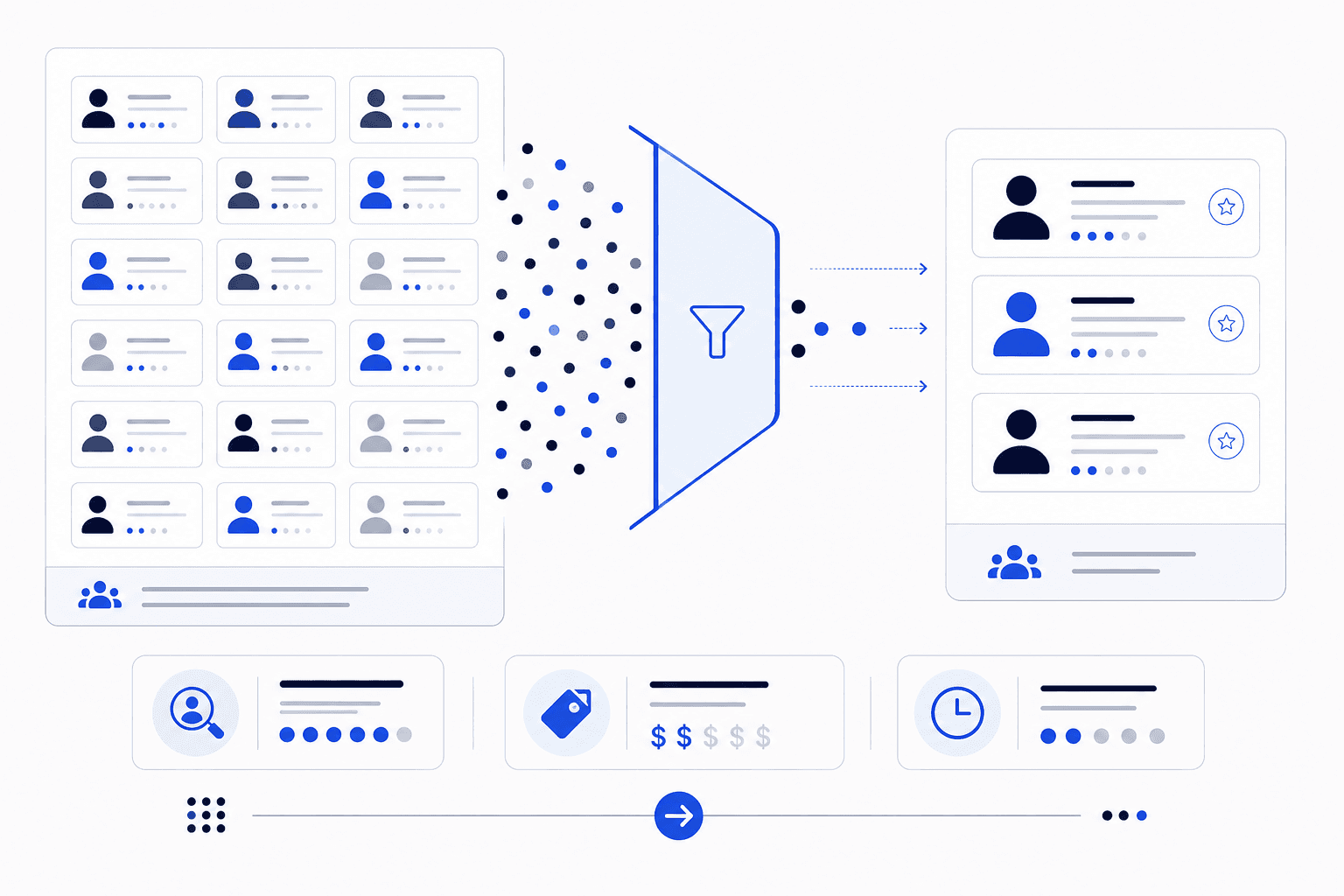
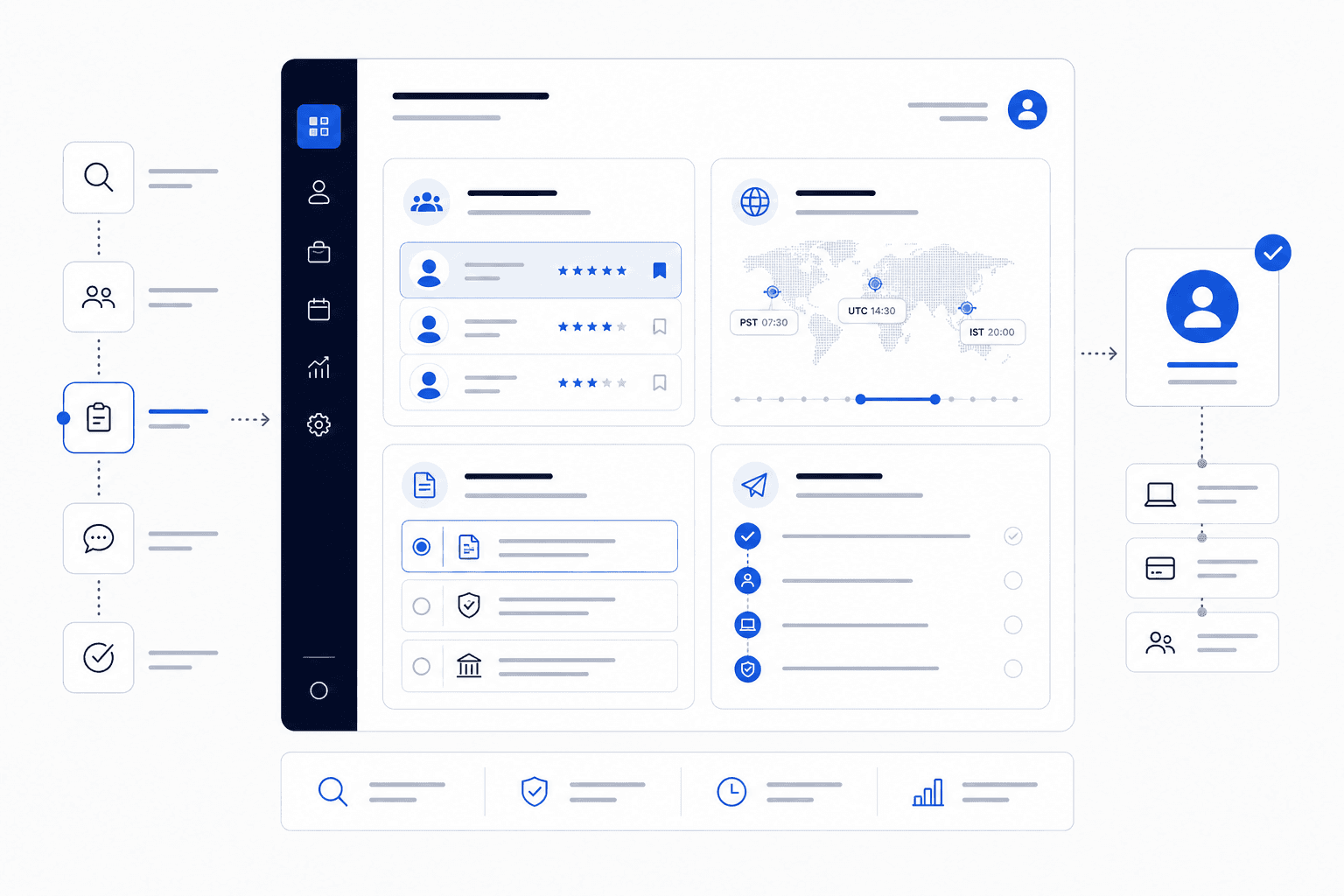
The platform’s AI-powered matching system analyzes candidate skills against your requirements and provides match scores.
You can search talent by specific technical skills like Python or TensorFlow and review complete verified profiles with triple verification.
OnlineJobs.ph is one of the largest Philippines-only remote work boards. You can search for AI engineers and find numerous candidates but the downside is the quality wildly varies and you still need to a do a fair amount of vetting.
Upwork shows successful Philippine ML freelancers at $30+/hour with strong reviews and experience building AI solutions for startups.
How to Assess Filipino AI Engineers
Look for candidates who can show end-to-end projects (data ingestion to model to deployment), use of LLM frameworks and vector stores in real apps, and cost and latency awareness on cloud AI services.
Test beyond ChatGPT-assisted coding
Ask questions where candidates must explain trade-offs, not just provide code snippets. Have them explain why their solution works, how they would test it, and how they would debug failures.
Many candidates can paste AI-generated answers but struggle when asked for justification.
Use Trial Tasks
Give a take-home exercise like “wrap an LLM API, log prompts/responses, and add one simple evaluation metric.” Review their code structure, error handling, logging choices, and security basics.
Evaluate communication
Clear written communication is decisive for remote work with US, UK, and AU teams. Ask for a short written design document or video walkthrough of their solution.
Common Hiring Challenges
Time to hire through traditional job boards averages 31 days. That’s over a month of posting, reviewing applications, screening, interviewing, and negotiating.
Freelancers are hit-or-miss. Some are incredible. Others overpromise and underdeliver.
The expertise can be narrow. An engineer great at building models might know nothing about deployment.
Someone who can set up infrastructure might struggle with the actual ML work.
Work with platforms that have standard agreements in place. Don’t DIY your international contracts.
Senior-Level Work in Practice
Top-tier Philippines-based AI engineers work on global remote roles at major tech companies, with salaries in the $165k-252k range.
Others lead AI development at recruiting platforms, building GenAI features that process thousands of applications.
They’re architecting multi-LLM systems, implementing RAG for better context retrieval, and optimizing inference costs.
Some do R&D work, experimenting with new models and testing different approaches.
Ask about their most complex project. Dig into the technical decisions they made. Understand how they debug problems when things break.
The best engineers have war stories. Models that wouldn’t converge, data pipelines that failed at 3 AM, production incidents that required creative solutions.
Benefits and Retention
Filipino workers value stability, 13th month bonuses, paid time off, and health coverage. These are reasons people stay in roles long-term.
Offering clear career progression makes a difference. From VA-plus-AI tasks into full AI engineering, or from mid-level into lead roles.
At the senior level, you’re competing with global remote offers. Western-style benefits and equity matter.
Engagement models include direct contractor (pay via Wise, candidate handles local taxes) or employer-of-record/BPO services that handle compliance and charge a markup.
When This Makes Sense
Hire a remote AI engineer from the Philippines when you need AI capabilities but don’t have $200k+ to hire in your local market.
When you want to move fast without sacrificing quality. When you’re building something that requires ongoing development, not a one-off project.
You need to be comfortable with remote work and have systems in place for communication and collaboration.
This doesn’t make sense when you need someone in the office every day, when your project requires security clearances or access to physical infrastructure, or when you’re not set up for remote collaboration.
Most companies fall into the first category but think they’re in the second.
Your Next Steps
Define your requirements. Write them down. Be specific about the tech stack, the project scope, and the timeline.
Move fast once you find someone good. The best engineers get snapped up quickly.
Start with a trial project. A few weeks of work on something contained. See how they communicate, how they solve problems, and whether they’re a fit.
Scale deliberately. Once you’ve found one good engineer, building a team gets easier. They can help evaluate future hires. They understand your stack and your standards.
The Philippines has the AI engineering talent you need. The infrastructure is there. The skills are there. The cost structure works.
You just have to know where to look and how to evaluate what you find.