
The Philippines has over 1.5 million remote workers. That’s a massive talent pool.
When you post a job, you’re tapping into that. Which means high volume. Sometimes overwhelming volume.
A typical job posting gets 100-500 applications. That’s normal. Not a glitch in the system.
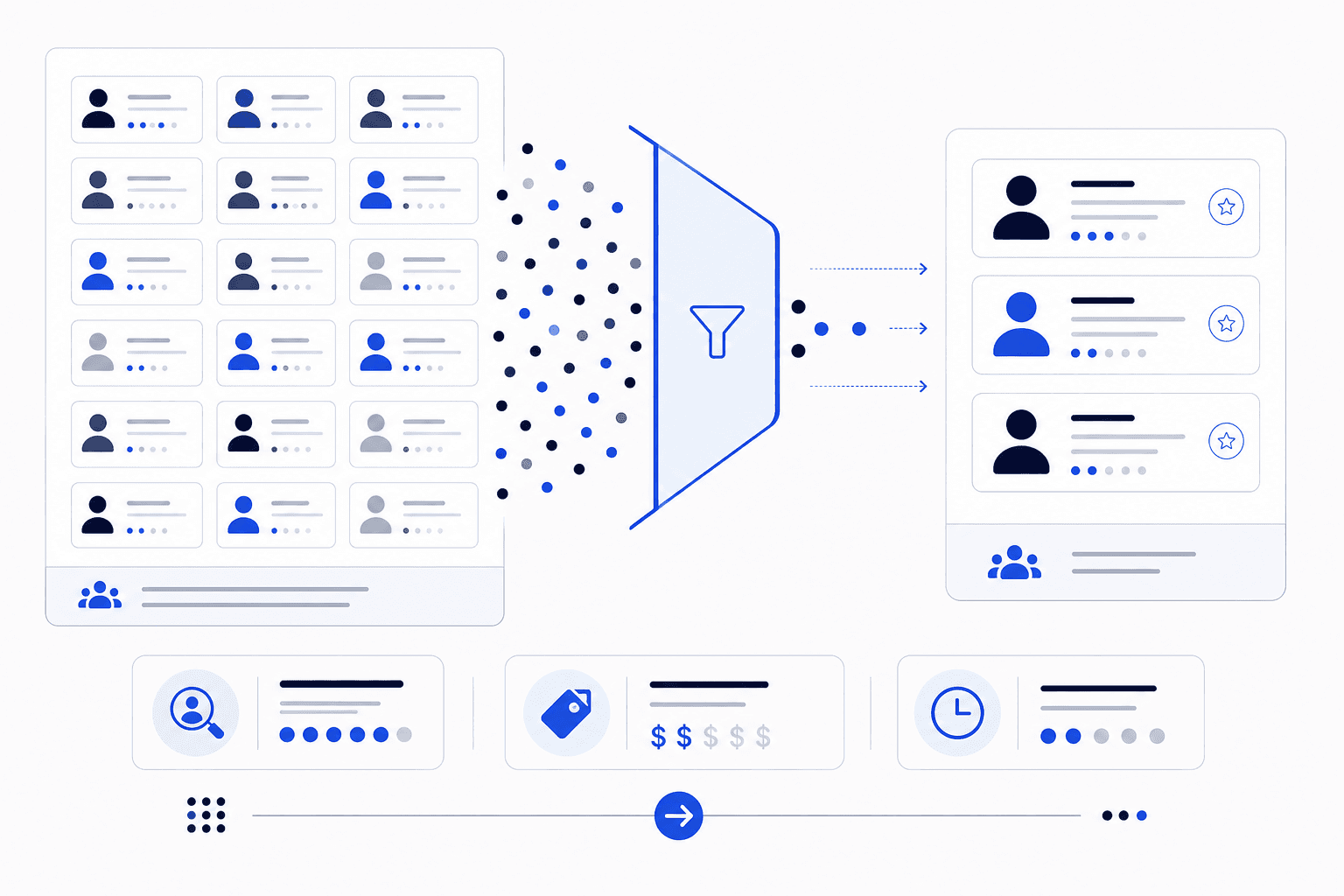
But here’s where it gets interesting: Out of those 100-500 applications, most companies end up hiring 1-5 people.
That’s a 10-20% overall conversion rate from application to hire.
The difference? Pre-screening. Agencies cut through the noise before you see anyone.
Are You Looking to Hire in the Philippines and Unsure Where to Start?
Get StartedBreaking Down Each Stage
Let me walk you through what happens at every step. With real numbers.
Stage 1: Getting Applications
You post the job. Within 1-2 weeks, you’ll have your applicant pool.
100-500 applications is standard. Sometimes more if you’re on the right platforms.
But volume isn’t the problem. Quality is.
Clear job descriptions flip this. Specify the actual work: “20 hours per week, lead generation via cold calls, must have CRM experience” gets you a 20-30% qualified rate instead.
Pay Ranges That Actually Work
The pay range matters too. $400-800 per month for full-time work is standard. That’s $5-10 per hour.
Anything significantly below market rate increases turnover by 40%.
Stage 2: Screening Candidates
Now you’ve got 100-500 applications. Time to narrow it down.
Most companies shortlist 20-100 candidates. That’s a 20-50% pass rate from the initial pile.
This takes 3-7 days if you’re moving fast.
What to Look For
English proficiency tests. Logic tests. Character questions like “How do you handle feedback?” or “Tell me about a time you disagreed with a client.”
Values mismatches should be automatic disqualifiers. If someone’s answers show they won’t fit your work style, cut them now. Not later.
Time Zone Considerations
The 12-16 hour time zone difference between the Philippines and the US, UK, or Australia adds 20-30% to screening time if you’re doing everything synchronously.
Use async tools. Recorded video responses. Written tests they complete on their time.
Track your application rates. If you’re getting low volume, your pay is probably below market. Repost with competitive rates.
Stage 3: Conducting Interviews
You’ve screened. Now you interview 5-20 people. That’s a 10-30% advancement rate from your shortlist.
This stage takes 1-2 weeks total.
Why Video Calls Are Non-Negotiable
Video calls are mandatory. If someone refuses a video interview, that’s a red flag. You need to see how they communicate in real-time.
Keep interviews short. 5-10 minutes per candidate. You’re assessing communication skills, goals, and cultural fit.
The Right Questions to Ask
Here’s something most people miss: Filipinos tend to avoid confrontation. It’s cultural. So when you ask “Can you do this task?” you’ll almost always get “yes.”
Ask different questions:
- “What would you do if you received unclear instructions?”
- “Walk me through how you’d handle this specific scenario.”
Verify references. Ask previous employers about reliability under pressure. This filters out the candidates who look good on paper but flake when things get busy.
About 30-50% of interviewed candidates move to trials.
You’re saving 80% on labor costs compared to local hires. But only if you hire the right person.
Stage 4: Running Trials
This is where most people either save themselves or make expensive mistakes.
Take your top 3 candidates. Give them a paid trial. 1-2 weeks. Real work, not busywork.
Data entry tasks. Mock lead generation. Whatever they’ll actually be doing.
50-70% of people who make it to trials get hired. That’s a high conversion rate because you’ve already filtered heavily.
Stage 5: Making the Hire
You’re at the end. 1-3 hires per funnel is typical.
Total time-to-hire: 4-8 weeks if you’re doing it yourself. 2-4 weeks if you use an agency or platform.
Offer full-time or contract terms. Include internet stipends, usually $50 per month. Filipino internet can be spotty, and this helps ensure they stay connected.
Retention sits at 70-80% when you pay market rates. Drop below market, and people leave for better opportunities.
Track Your Funnel
Track your funnel metrics:
- Applications per week
- Drop-off percentage at each stage
- Time-to-hire
- Interview-to-hire ratio
These numbers tell you where your process breaks down.
Where to Find Talent
Let me give you the tactical stuff. Things that move those conversion rates in your favor.
Post on Philippines-specific platforms.
You’ll get 300+ applications fast.
HireTalent.ph connects you directly with reviewed Filipino professional profiles, so you skip the unqualified pile and start with candidates who match your requirements.
Common Mistakes That Kill Your Funnel
Rushing the Hire
People hire the first person who responds because they need help NOW.
Bad idea. Screen at least 50 candidates. The first responder is rarely the best fit.
Skipping Video Interviews
Some people skip video interviews. They rely on written communication only. Then they’re surprised when the person can’t speak clearly on calls with clients.
Video interview or it’s a red flag. Every time.
No Trial Period
The biggest mistake? No trial period. Just hire someone based on an interview and hope it works out.
It doesn’t work out 40% of the time. Trials save you from that turnover.
Paying Below Market
You might save $50 a month. Then the person leaves after two months and you start over. That restart costs way more than $50.
Market pay retains people. It’s that simple.
Scaling Your Hiring Process
Once you’ve hired a few people, build SOPs for your recruitment process.
Document Everything
Document every step:
- What tests you use
- What questions you ask
- What you look for in trials
Hire a Recruiter
Then hire a recruiter from the Philippines to run this process for you. They can track applications, conduct initial screenings, schedule interviews.
You only step in for final interviews and trial reviews.
This is how you go from hiring one person in 6 weeks to hiring 10 people in the same timeframe.
Leverage Time Zone Advantages
The Philippines offers English proficiency and cultural alignment with Western business practices. That’s why US, UK, and Australian companies hire there for 24/7 operations.
The time zone difference becomes an advantage. Your Filipino team works while you sleep. You wake up to completed tasks.
Your Actual Benchmarks
Let me summarize the numbers you should be hitting:
Application Stage:
- 100-500 applications per job posting
- If you’re getting less, increase your pay or improve your job description
Screening Stage:
- 20-50% screening pass rate
- 20-100 candidates move to your shortlist
Interview Stage:
- 10-30% interview advancement rate
- 5-20 people get interviewed
Trial Stage:
- 30-50% move from interviews to trials
- Your top 3 candidates
- 50-70% of trial candidates get hired
Overall Metrics:
- 10-20% overall conversion from application to hire
- 1-3 hires per funnel
- 4-8 weeks for DIY hiring
- 2-4 weeks with agency support
Adjust for Your Role
These numbers vary by role. Lead generation might see higher application volumes. Specialized technical roles might see fewer applications but higher quality.
The key is tracking YOUR numbers. Not just accepting these as gospel.
Optimize Based on Data
Run your funnel. Measure it. See where candidates drop off. Fix that stage.
Maybe your screening is too harsh and you’re cutting good candidates. Maybe it’s not harsh enough and you’re wasting time on bad interviews.
The data tells you.
What This Means for You
Hiring Filipino remote workers isn’t complicated. But it is a process.
You need volume at the top. Clear filtering in the middle. Trials before final decisions.
Most companies mess up by either not screening enough or not running trials. Fix those two things and your success rate jumps.
The numbers I’ve shared come from real hiring data. Companies doing this every day. Not theory.
Your Action Plan
Your funnel will look similar if you follow the same structure:
- Post clear jobs
- Screen hard
- Interview on video
- Run paid trials
- Track everything
Do that and you’ll hit 50-70% trial-to-hire conversion rates. You’ll fill roles in 2-4 weeks instead of months. You’ll save 80% on labor costs with people who actually stick around.
The Philippines has 1.5 million remote workers ready to work. Your job is building a funnel that finds the right ones.
Now you know what that funnel should look like.