
New York has a problem.
The cost of living is insane. You can’t hire someone for $15/hour and expect them to survive in Brooklyn, let alone Manhattan.
Entry-level positions that used to pay $35,000 now need to pay $50,000–$55,000 just to get anyone through the door — and that’s before benefits, payroll taxes, and office space push the all-in cost to $65,000–$80,000.
For a small business, that’s impossible.
I talked to a guy who runs a property management company in Queens.
He needed someone to answer phones, schedule appointments, and handle basic customer service simple stuff.
Local candidates wanted $55,000 plus benefits — closer to $70,000 once you tally the real cost. He couldn’t afford that and keep his margins.
The Solution That Actually Worked
He hired a Filipino remote worker for $1,200/month (about $14,400/year), full-time, EST hours.
That worker has been with him for two years now. Never missed a day. Clients can’t tell she’s not in the office.
His business survived because of that hire.
Florida’s Problem Is Different But the Solution Is the Same
Florida doesn’t have New York’s cost-of-living problem. Florida has a turnover problem.
People move to Florida, work for six months, then quit because they found something better or moved again. The transient population makes hiring locally a nightmare.
A marketing agency owner in Tampa told me he was spending $10,000 a year just on recruiting and training because people kept leaving.
He switched to Filipino remote workers on EST hours.
His turnover dropped to almost zero. People stayed for years, not months.
When you hire someone in the Philippines, they’re not thinking about their next opportunity. They’re thinking about building a career with you. That stability is worth more than people realize.
The EST Shift Sweet Spot Nobody Talks About
Here’s something most articles won’t tell you: 9:00 p.m. to 6:00 a.m. Manila time is actually when a lot of Filipinos prefer to work.
Not all of them. But more than you’d think.
What These Businesses Actually Need
Most companies hiring Filipino remote workers aren’t looking for rocket scientists.
The Core Roles That Work Best
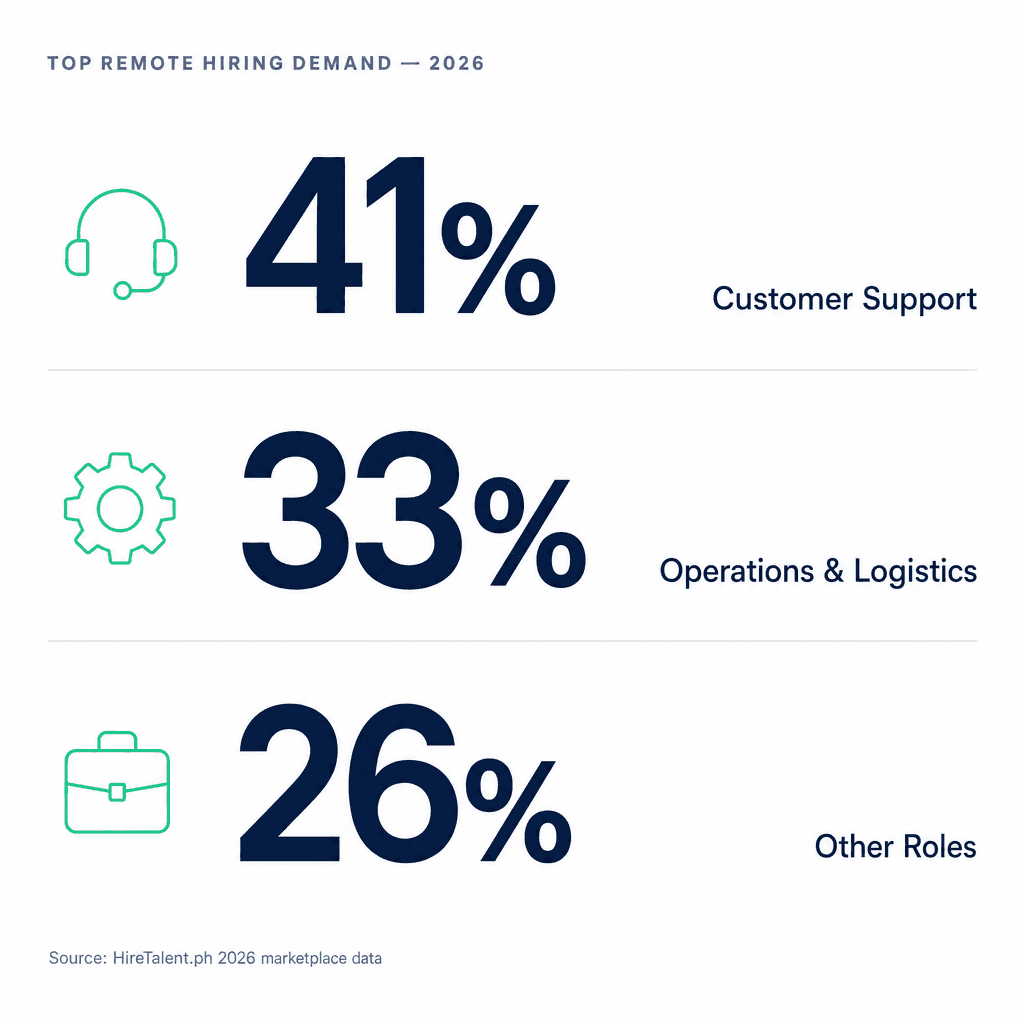
They need:
- Customer support that doesn’t sound robotic
- Administrative work that gets done without supervision
- Social media management that understands American culture
- Data entry that’s accurate
- Bookkeeping that follows US standards
Basic business operations.
The Real Cost Breakdown
Let’s talk actual numbers.
What You’ll Actually Pay
A full-time Filipino remote worker on EST hours costs between $700 and $1,500/month for general support roles, and $1,500 to $2,500/month for specialists with strong English and 5+ years of experience. That’s $8,400 to $30,000 per year depending on the role.
The same position in New York? $50,000 to $70,000 base — plus another 25–30% on top once you add benefits, payroll taxes, and office space.
In Florida? $35,000 to $50,000, still plus all the extras.
The Real Savings in 2026
The savings story has actually widened in 2026. On base salary alone, you’re saving 65–80% vs. a US hire. Once you factor in benefits, payroll taxes, and office space, all-in savings often clear 80%. For most non-customer-facing roles, hiring offshore is now the default — not the alternative.
One accounting firm in Fort Lauderdale replaced one mid-level local bookkeeper (~$65,000 fully loaded) with three Filipino bookkeepers at about $1,500/month each — total ~$54,000/year. They tripled their capacity overnight, with EST coverage they didn’t have before.
Why 2026 Is Different From Every Other Year
The infrastructure finally caught up.
The Technology That Changed Everything
Platforms like HireTalent.ph let you post a job and get qualified candidates within 24 hours. You’re not dealing with agencies that mark up rates by 100%. You’re hiring directly and keeping costs reasonable.
Payment systems work now too. You can pay someone in the Philippines as easily as you pay your cell phone bill.
The Legal Clarity That Didn’t Exist Before
And the legal stuff? It’s clearer than it’s ever been. You’re hiring contractors, not employees. You’re not dealing with US employment law. It’s straightforward.
Everything that used to be hard about international hiring is now easy. That’s why 2025 is the tipping point.
What Businesses Get Wrong When They Start
The biggest mistake is treating Filipino remote workers like they’re disposable.
You get what you give.
Mistake #1: The Race to the Bottom on Pay
If you pay $3/hour and expect someone to work like a robot, you’ll get terrible results. If you pay fairly ($5–$10/hour for general VA work, $10–$15/hour for specialists) and treat people like humans, you’ll get loyalty and quality that beats local hires.
Mistake #2: Skipping Real Onboarding
You can’t just hire someone and assume they’ll figure it out. You need to train them on your systems, your expectations, and your culture. That takes time up front but saves you months of frustration later.
Mistake #3: The Micromanagement Trap
Filipino workers are generally more independent than people expect. Give them clear instructions and let them work. Checking in every hour defeats the whole purpose of hiring remote.
The Types of Businesses Making This Work
It’s not just tech startups.
Industries Leading the Shift
- Real estate agencies: lead follow-up and appointment setting
- Law firms: legal research and document prep
- Medical practices: billing and patient scheduling
- E-commerce companies: entire customer service teams in the Philippines on EST hours
The Unexpected Success Stories
The range is wide. I’ve seen a landscaping company hire someone to manage scheduling, a restaurant group hire someone to handle online orders and reservations, and a construction company hire someone for project management and client communication.
If your business has tasks that can be done on a computer, you can probably hire a Filipino remote worker to do them.
How to Actually Find Good People
This is where most articles get vague. Here’s the specific process that works.
Step 1: Write a Real Job Description
Post a detailed job description. Not a two-sentence summary. Actually explain what you need, what hours, what pay, and what tools they’ll use.
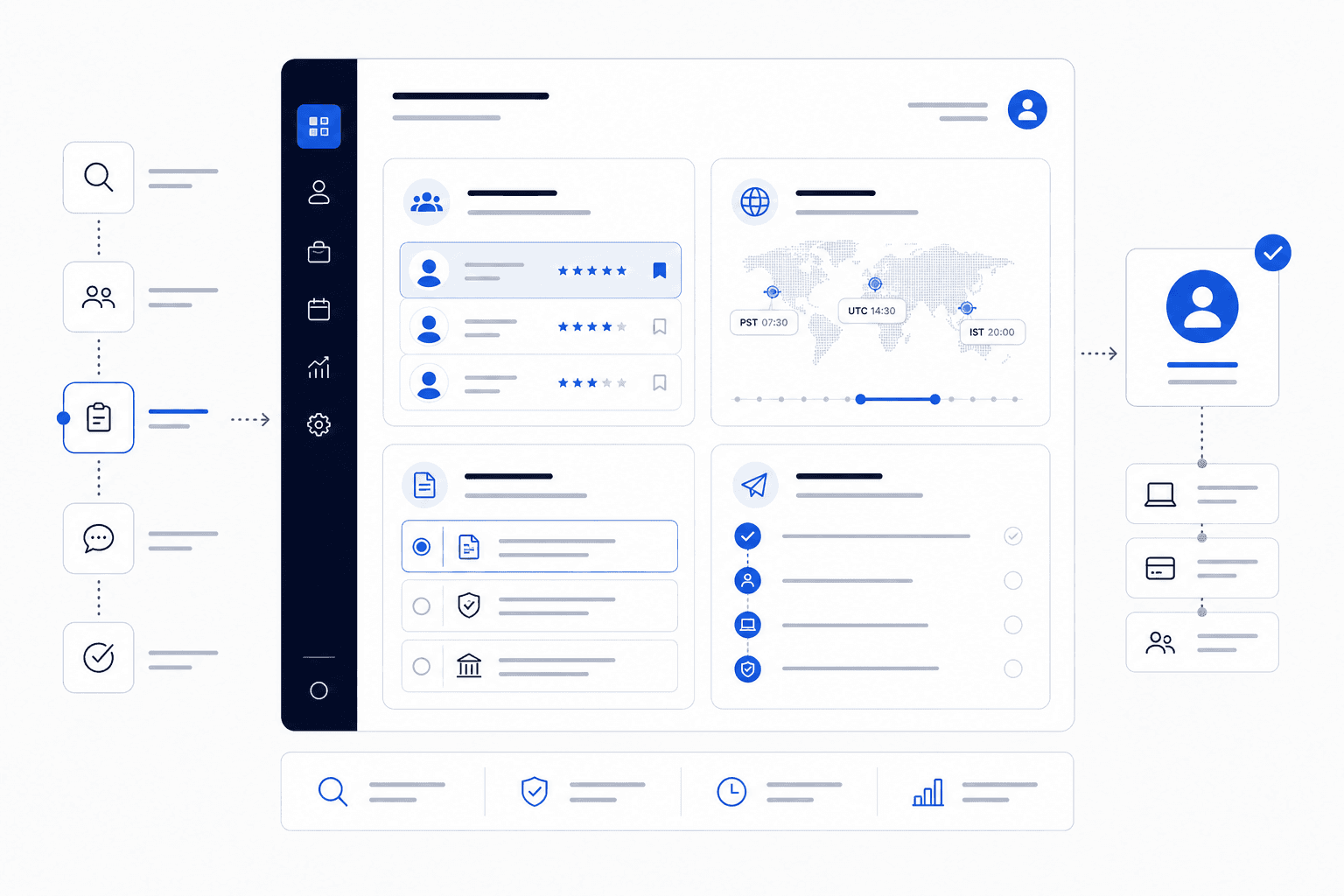
On HireTalent.ph, you can filter specifically for candidates available during EST hours and see their experience upfront. That cuts your screening time in half.
Step 2: Do Multiple Video Interviews
Then do video interviews. Not just one — at least two.
The first interview is to see if they can communicate clearly and understand what you’re asking for. The second interview is to dig into their actual experience and see if they’ve done this kind of work before.
Step 3: Verify Technical Requirements
Check their internet speed. Ask them to run a speed test during the interview. You need at least 10 Mbps download and 5 Mbps upload for most jobs.
Step 4: Start With a Paid Trial
Start with a trial task. Pay them fairly, but make it clear you’re both evaluating fit.
If it works, keep them. If it doesn’t, part ways professionally and try again.
What the Next Five Years Look Like
This isn’t a trend that’s going away.
The Geographic Expansion
New York and Florida businesses are leading this shift, but it’s spreading: Texas, California, Illinois. Every state with high labor costs or high turnover is looking at Filipino remote workers on EST hours as the solution.
The Talent Pool Reality
The Philippines has about 110 million people; roughly 70 million are working age. The talent pool isn’t running out anytime soon.
The Market Evolution
As more businesses figure this out, quality will keep improving. Competition for the best workers will push rates up slightly, but it’ll still be dramatically cheaper than hiring locally.
The businesses that figure this out now will have a massive advantage over the ones that wait.
The Bottom Line
New York and Florida businesses aren’t hiring Filipino remote workers on EST shifts because it’s trendy.
They’re doing it because it works: lower costs, better retention, solid quality, and time-zone alignment that actually makes sense.
If you’re still trying to hire locally for roles that can be done remotely, you’re fighting an uphill battle you don’t need to fight.
The solution is already here. Thousands of businesses are using it right now.
The question isn’t whether you should consider Filipino remote workers. The question is how much longer you’re going to wait before you do.