Look at your calendar from last week.
How many hours did you spend on HR tasks? Updating records. Processing leave requests. Answering the same benefits questions over and over. Trying to figure out if you’re compliant with new regulations.
If it’s more than 5 hours a week, you’re already past the point where you should have hired help.
Are You Looking to Hire in the Philippines and Unsure Where to Start?
Sign up for an account and recruit your next employee within minutes!
Get Started
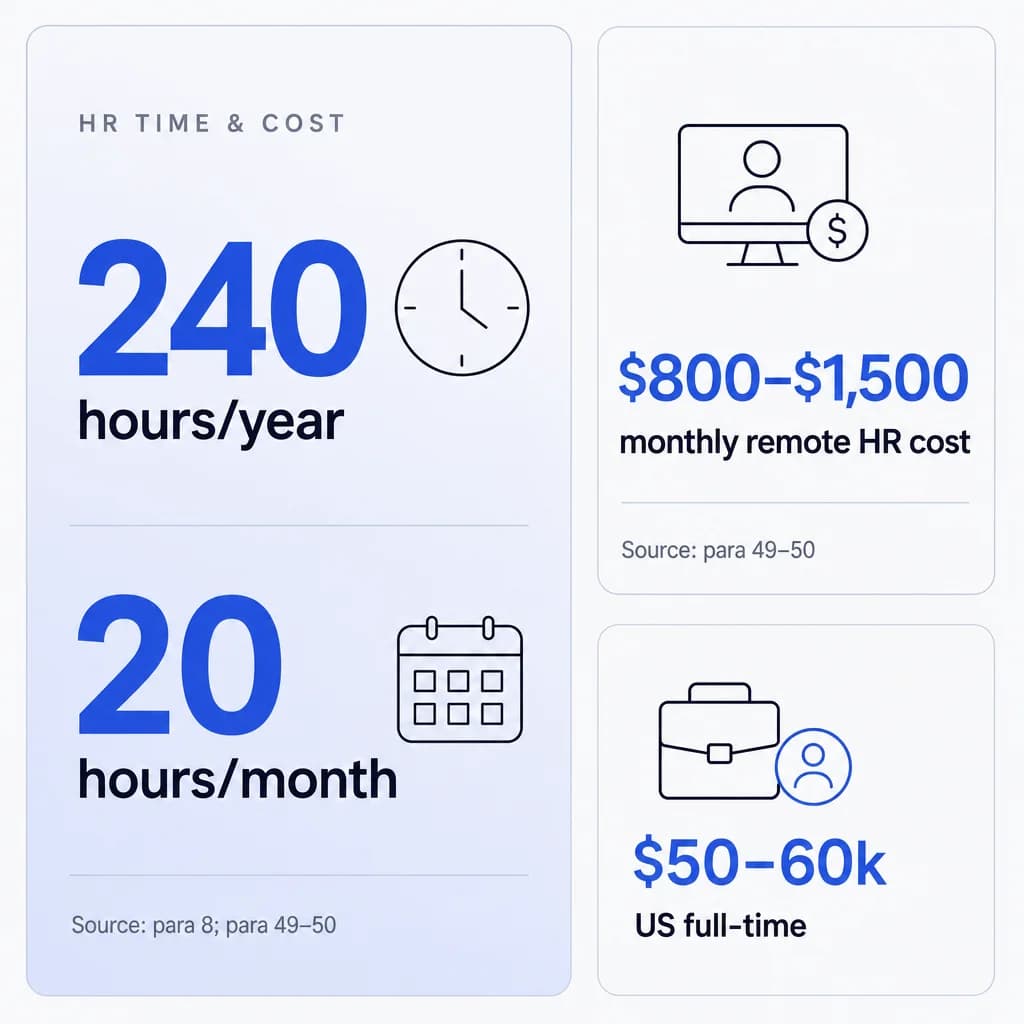
That’s 20 hours a month. Over 240 hours a year. That’s six full work weeks you’re spending on tasks someone else could handle for a fraction of what your time is worth.
Calculate What Your Time Actually Costs
Do the math on what your time costs. Really do it. Take your desired annual income and divide it by 2,000 (that’s roughly your working hours in a year). If you want to make $150,000 a year, your time is worth $75 an hour.
Now multiply that by the hours you spend on HR tasks. The number is probably uncomfortable to look at.
What Tasks Actually Get Handed Off
Daily Operations They Own
Let’s be specific about what a remote HR assistant handles.
Employee records management. They maintain your HRIS, keep files organized, and make sure everything is up to date.
Onboarding coordination. They send welcome emails, prepare first-day materials, collect new hire paperwork, and make sure nothing gets missed.
Benefits administration support. They answer common questions, help with enrollment, and track important deadlines.
Time and attendance tracking. They monitor timesheets, flag issues, and prepare reports for payroll.
Compliance and Documentation
Compliance tracking. They maintain a calendar of deadlines, prepare required postings, and remind you when action is needed.
Policy documentation. They create and update your employee handbook, write clear policies, and make sure everyone has access to current information.
Recruitment support. They post jobs, screen initial applications, schedule interviews, and manage candidate communication.
What Stays With You
Notice what’s missing from this list? Strategic decisions. Legal advice. Final hiring calls.
Those stay with you. A remote HR assistant handles execution and administration. You handle strategy and decisions.
Small Errors, Big Consequences
Small mistakes in HR can become big problems.
Maybe you forgot to update someone’s emergency contact. Or you missed a deadline for benefits enrollment. Or you can’t find that signed document you know you saved somewhere.
These aren’t just annoying. They’re risks.
One missed compliance deadline can cost thousands in penalties. One lost document during an audit can create legal headaches. One mistake in payroll processing can damage trust with your team.
A remote HR assistant makes this their focus. They’re not switching between ten different business priorities. They’re tracking deadlines, organizing documents, and making sure nothing falls through the cracks.
The 5-to-15 Employee Breaking Point
Here’s a pattern I see all the time.
A business is doing well. They’re hiring. Maybe they went from 5 employees to 15 in the last year. That’s amazing growth.
But their HR processes are still built for 5 people.
They’re using the same spreadsheets. The same informal communication about time off. The same “we’ll figure it out as we go” approach to onboarding.
It worked fine with 5 people. With 15, it’s chaos.
What Broken Systems Look Like
New employees don’t know where to find information. Managers are confused about policies because nothing is documented. Someone asks about the vacation policy and three different people give three different answers.
Growth is good. But growth without systems is a mess.
If you’ve hired more than 3 people in the last six months, you need HR support. Not eventually. Now.
You’re Spending Money on Tools You Barely Use
The Expensive Software Sitting Idle
Let me guess. You bought an HRIS system because someone told you that’s what growing businesses do.
Now you’re paying $200 a month for software you log into maybe twice a month. You know it can do amazing things. You just don’t have time to learn it or set it up properly.
Or you have three different tools that don’t talk to each other. One for time tracking. One for documents. One for benefits. And you’re manually moving information between them.
Turn Your Tech Stack Into an Asset
This is exactly what a remote HR assistant solves.
They learn the tools. They set them up correctly. They use them every day so you actually get value from what you’re paying for. At HireTalent.ph, you can find remote workers who already have experience with common HR platforms and can hit the ground running.
The software you’re already paying for becomes useful instead of just being another line item on your expense report.
Employees Are Coming to You With Questions You Can’t Answer
The “Let Me Get Back to You” Trap
“What happens to my health insurance if I take unpaid leave?”
“Can I work remotely from another state for a month?”
“How does the retirement plan matching actually work?”
You have no idea. And you don’t have time to figure it out.
So you say “Let me get back to you” and add it to your already overflowing to-do list. Three days later, the employee follows up. You still haven’t found the answer.
What This Does to Your Credibility
This makes you look disorganized. It makes your employees feel like you don’t care about their concerns. Neither is true. You’re just overwhelmed.
An HR assistant owns these questions. They research the answers. They create documentation so the next person who asks gets an immediate response. They become the go-to person so these questions stop landing on you.
You’re Avoiding HR Tasks Until They Become Urgent
Be honest. When was the last time you updated your employee handbook?
Do you even have an employee handbook?
If you’re like most small business owners, these tasks live on a someday/maybe list that never gets done. They only become urgent when you have a problem.
Why Reactive HR Costs More
Someone threatens legal action and suddenly you need that documentation. You’re hiring and realize your onboarding is a disaster. An employee is underperforming and you realize you have no paper trail.
Reactive HR is expensive HR.
A remote HR assistant makes these tasks proactive. They maintain systems. They keep documentation current. They catch small issues before they become big problems.
The Real Cost Comparison
The cost difference is significant.
A full-time HR coordinator in the US might cost $50,000–60,000 a year plus benefits.
A skilled remote HR assistant from the Philippines typically costs $800–1,500 per month for full-time work.
That’s not a typo. You’re looking at $10,000–18,000 a year for the same hours of work.
Even if you only need part-time help right now, you’re spending a fraction of what local hiring would cost.
When the Timing Is Actually Right
Some business owners wait for perfect conditions. Perfect conditions don’t exist.
But there are good indicators that now is the right time:
You have at least 10 employees (HR tasks become consistent enough to justify dedicated help)
You’re spending more than 5 hours a week on HR administration (your time is too valuable)
You’ve made a mistake in the last month that cost you time or money (the next one might cost more)
You’re planning to hire 3 or more people in the next six months (get systems ready before growth hits)
You’re losing sleep over compliance concerns (peace of mind has value)
An employee has complained about disorganization or lack of clear policies (your team is noticing the gaps)
If even two of these are true for you, you’re ready.
What Happens If You Wait
The Real Costs of Delay
Let’s talk about what happens if you ignore these signs.
Talent loss. Your best employee quits because they’re frustrated with disorganization. Replacing them costs 6–9 months of their salary, plus productivity loss while you search and train someone new.
Compliance penalties. You miss a deadline and face penalties. Depending on the violation, this could be thousands or tens of thousands of dollars.
Audit nightmares. You make a mistake in employee classification and get audited. The back taxes and penalties make you wish you’d invested in proper HR support years ago.
Stunted growth. Your growth stalls because you can’t hire fast enough. You don’t have systems to onboard people quickly. Opportunities pass you by.
Burnout. You’re working nights and weekends on administrative tasks instead of building your business. Eventually something breaks.
These aren’t scare tactics. These are patterns that play out in growing businesses every day.
Making the Decision
Here’s how to think about this decision.
Calculate what your time is actually worth. Be realistic about how many hours you spend on HR tasks each month. Multiply those numbers.
Now look at what a remote HR assistant costs. The math usually isn’t even close.
If you’re ready to move forward, platforms like HireTalent.ph let you post your position and review qualified candidates who have specific HR experience.
Then make the hire.
What Changes After You Hire
The first few weeks feel weird.
You’re used to handling everything yourself. Now you’re delegating. It takes adjustment.
But within a month, you notice changes.
Your inbox is cleaner. Questions that used to land on you are being handled. You’re not staying late to update spreadsheets.
The Three-Month Transformation
Within three months, the impact is obvious.
Your systems actually work. New hires have a smooth onboarding experience. Employee records are organized. Compliance deadlines are met before they’re urgent.
You have time back. Time to focus on revenue. Time to think strategically. Time to actually lead your business instead of being buried in administration.
That’s what you’re really hiring for. Not just task completion. You’re hiring back your time and your sanity.
The Bottom Line
You already know if you need this.
You felt it when you read the signs earlier. You recognized yourself in at least a few of them.
The question isn’t really whether you need HR help. It’s whether you’re ready to admit it and do something about it.
Stop waiting for the perfect time. Stop convincing yourself you can handle it a little longer.
If your business has grown to the point where HR tasks are taking significant time, you’re ready.
If you’re making mistakes or losing sleep over compliance, you’re ready. If your team is growing and your systems aren’t keeping up, you’re ready.
The cost of waiting is higher than the cost of hiring.
Do the math. Make the decision. Get your time back.
Your business will grow faster. Your team will be happier. And you’ll wonder why you waited so long.