
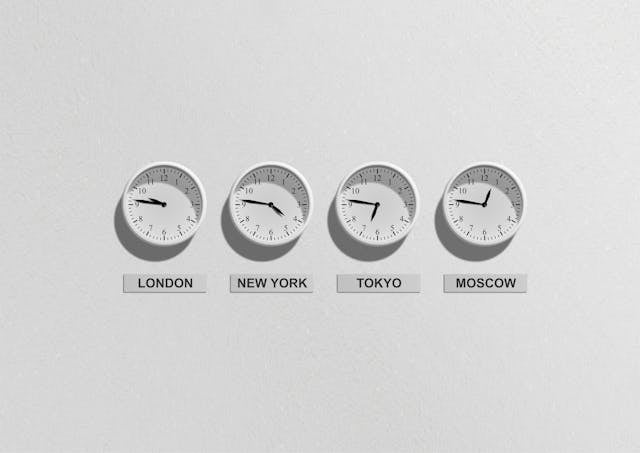
New Zealand is ahead of the Philippines.
NZST (New Zealand Standard Time) is 4 hours ahead of Philippine Time.
That’s UTC+12 versus UTC+8.
So when it’s 9:00 AM in Auckland, it’s 5:00 AM in Manila.
When it’s 1:00 PM in Wellington, it’s 9:00 AM in Metro Manila.
Simple subtraction: Take your New Zealand time, subtract 4 hours, and you’ve got Philippine Time.
Ready to Build Your Filipino Remote Team?
Find Filipino professionals who fit your New Zealand schedule
When Daylight Saving Changes Everything
Here’s where it gets slightly more complicated.
New Zealand uses daylight saving time.
The Philippines doesn’t.
From late September to early April, New Zealand switches to NZDT (New Zealand Daylight Time). That’s UTC+13.
During those months, the gap becomes 5 hours instead of 4.
So 9:00 AM NZDT equals 4:00 AM in the Philippines.
8:00 AM NZDT equals 3:00 AM PHT.
This matters more than you think. Because that one extra hour can be the difference between a sustainable schedule and someone burning out after three months.
Complete NZST to PHT Conversion Table
Here’s every hour of the New Zealand business day converted to Philippine Time during standard time:
| NZST (New Zealand Standard Time) | PHT (Philippine Time) |
| 12:00 AM (Midnight) | 8:00 PM (Previous Day) |
| 1:00 AM | 9:00 PM (Previous Day) |
| 2:00 AM | 10:00 PM (Previous Day) |
| 3:00 AM | 11:00 PM (Previous Day) |
| 4:00 AM | 12:00 AM (Midnight) |
| 5:00 AM | 1:00 AM |
| 6:00 AM | 2:00 AM |
| 7:00 AM | 3:00 AM |
| 8:00 AM | 4:00 AM |
| 9:00 AM | 5:00 AM |
| 10:00 AM | 6:00 AM |
| 11:00 AM | 7:00 AM |
| 12:00 PM (Noon) | 8:00 AM |
| 1:00 PM | 9:00 AM |
| 2:00 PM | 10:00 AM |
| 3:00 PM | 11:00 AM |
| 4:00 PM | 12:00 PM (Noon) |
| 5:00 PM | 1:00 PM |
| 6:00 PM | 2:00 PM |
| 7:00 PM | 3:00 PM |
| 8:00 PM | 4:00 PM |
| 9:00 PM | 5:00 PM |
| 10:00 PM | 6:00 PM |
| 11:00 PM | 7:00 PM |
Bookmark this. You’ll use it constantly.
NZDT to PHT Conversion Table (Daylight Saving Time)
From late September to early April, New Zealand runs on NZDT. Here’s what that looks like:
| NZDT (New Zealand Daylight Time) | PHT (Philippine Time) |
| 12:00 AM (Midnight) | 7:00 PM (Previous Day) |
| 1:00 AM | 8:00 PM (Previous Day) |
| 2:00 AM | 9:00 PM (Previous Day) |
| 3:00 AM | 10:00 PM (Previous Day) |
| 4:00 AM | 11:00 PM (Previous Day) |
| 5:00 AM | 12:00 AM (Midnight) |
| 6:00 AM | 1:00 AM |
| 7:00 AM | 2:00 AM |
| 8:00 AM | 3:00 AM |
| 9:00 AM | 4:00 AM |
| 10:00 AM | 5:00 AM |
| 11:00 AM | 6:00 AM |
| 12:00 PM (Noon) | 7:00 AM |
| 1:00 PM | 8:00 AM |
| 2:00 PM | 9:00 AM |
| 3:00 PM | 10:00 AM |
| 4:00 PM | 11:00 AM |
| 5:00 PM | 12:00 PM (Noon) |
| 6:00 PM | 1:00 PM |
| 7:00 PM | 2:00 PM |
| 8:00 PM | 3:00 PM |
| 9:00 PM | 4:00 PM |
| 10:00 PM | 5:00 PM |
| 11:00 PM | 6:00 PM |
Notice the shift. That 9:00 AM New Zealand meeting moves from 5:00 AM to 4:00 AM in Manila.
One hour makes a difference.
The Three Schedule Patterns Kiwi Companies Actually Use
I’ve seen three main approaches with New Zealand companies hiring Filipino remote workers.
Pattern One: Full Mirror Schedule
The remote worker covers your entire business day.
8:00 AM to 4:30 PM NZST becomes 4:00 AM to 12:30 PM PHT.
This works for roles that need constant same-day response. Customer support. Operations coordination. Construction estimating. Accounting that needs to match your local team’s hours.
For example:
A New Zealand construction company hired a remote estimator in Manila. Schedule is Monday to Friday, 8:00 AM to 5:00 PM New Zealand time.
That’s 3:00 AM to 12:00 PM in the Philippines during daylight saving months.
It works because the pay is fair and the schedule is consistent.
Pattern Two: Civilized Start Times
Start a bit later to make mornings more reasonable in the Philippines.
10:00 AM to 6:00 PM NZST equals 6:00 AM to 2:00 PM PHT.
You lose the first hour or two of your day without overlap, but you gain someone who isn’t dragging themselves out of bed at 3:00 AM.
This schedule covers your afternoon perfectly. Meetings happen during your 10:00 AM to 2:00 PM window, which is their 6:00 AM to 10:00 AM.
Pattern Three: Overlap Plus Async
Your remote worker works normal Philippine hours.
9:00 AM to 6:00 PM in Manila overlaps with 1:00 PM to 6:00 PM NZST.
You get 4-5 hours of real-time collaboration in your afternoon. The rest happens asynchronously.
You hand off tasks before you leave. They complete work during their afternoon. You review it the next morning.
This requires more structure, but it’s the most sustainable long-term schedule.
Ready to find Filipino Talent for your Kiwi Business?
Start building your remote team. Browse Filipino talent, post jobs, test and Hire—all in one platform.
How New Zealand Compares to Other Countries
If you’ve hired remote workers for Australian companies, you already know how friendly those time zones are.
Australia Eastern Time is only 2-3 hours ahead of the Philippines. Almost perfect overlap.
New Zealand is slightly tougher. That 4-5 hour gap means earlier mornings.
But it’s still dramatically better than US or UK hours.
The UK is 7-8 hours behind the Philippines. Someone covering London hours works Philippine evenings.
US Eastern Time is 12-13 hours behind. That’s a full night shift.
New Zealand sits in the middle. Early mornings, but still daytime work.
How to Make This Work Long-Term
The companies that succeed with hiring Filipino remote teams do a few things consistently.
They communicate clearly about time zones from the start.
They build schedules that respect both sides.
They pay fairly for early morning work.
They use tools to eliminate confusion.
And they treat time zone differences as a logistics challenge to solve, not a barrier to hiring.
Because here’s the truth: New Zealand and the Philippines can work together incredibly well. The gap is manageable. The talent is there. The infrastructure exists.
You just need to set it up right from the beginning.
Ready to Find Your Next Great Hire?
Join our growing community of employers and start connecting with skilled candidates in the Philippines.