LinkedIn’s 2025 Workplace Learning Report shows 68% of companies are prioritizing SEO and digital marketing upskilling right now. Not next year. Now.
Remote teams that get trained see 25% higher retention rates (Workable’s 2025 survey). Here’s the kicker: 91% of companies report actual productivity gains from upskilling.
Are You Looking to Hire in the Philippines and Unsure Where to Start?
Sign up for an account and recruit your next employee within minutes!
Get Started
You’re not just keeping people busy with training. You’re making them better at the work they’re already doing.
Step 1: Assess Current Skills Without Wasting Time
Don’t assume your remote worker knows nothing about SEO. Don’t assume they know everything either.
The Five-Minute Skills Audit
Create a Google Form with five questions:
Rate your familiarity with Ahrefs or SEMrush (1–5)
Have you done keyword research before?
Do you know what on-page optimization means?
Can you explain what a meta description does?
Have you used Google Analytics?
This takes them five minutes to fill out and you two minutes to review. Now you know where to start.
Set Micro-Goals That Fit Around Real Work
Set micro-goals. Week one: “Find 10 keywords for our niche.” Track it in Notion or Trello.
The key is bite-sized. One employer broke SEO training into 10-minute YouTube videos plus 5-minute application tasks.
Their remote worker did it during slow hours in the evening (Philippine time). Zero disruption to daily work.
Why This Approach Works for Filipino Professionals
Filipinos excel at structured, asynchronous tasks. They’re motivated by clear progression. “Master this, unlock bonus projects” works better than vague “professional development” talk.
They’re structured, they follow systems, and they actually complete the courses you assign them.
Step 2: Choose Training Resources That Work on Mobile
What matters: 90% of Filipinos access work tools on their phones. Your training needs to work on mobile, be asynchronous, and not take more than 20–30 minutes per day.
Free Micro-Courses That Actually Work
Ahrefs Academy has YouTube videos called “SEO for Beginners.” Each one is 10–15 minutes. Free certification after completion.
One employer said their Filipino remote worker went from basic content writing to ranking articles in two weeks using just these videos.
Google’s SEO Starter Guide is another solid option. It’s free, official, and not full of outdated tactics.
Self-Paced Platforms Your Team Will Actually Use
HubSpot’s SEO Course takes four hours total. Spread that over two weeks at 20 minutes per day.
Coursera offers Google Analytics certification in audit mode (free).
Filipino freelancers like these because they can add certifications to their profiles — more credentials mean better opportunities for them.
Practical Learning Beats Pure Theory
MarketMuse has a free tier that lets people practice actual optimization.
You can tell your remote worker: “Use the SEMrush free trial for your keyword task today.” They learn while doing billable work.
One Australian boss assigned their remote worker to audit their website using free Moz tools. The worker learned SEO fundamentals while actually improving the site.
Step 3: Leverage Time Zones for Zero-Disruption Training
Your 9 AM is their 9 PM (roughly, depending on location). This is perfect for training.
How Async Training Actually Works
When you’re starting your workday, they’re wrapping up. They can spend 30 minutes on a training module during their wind-down time.
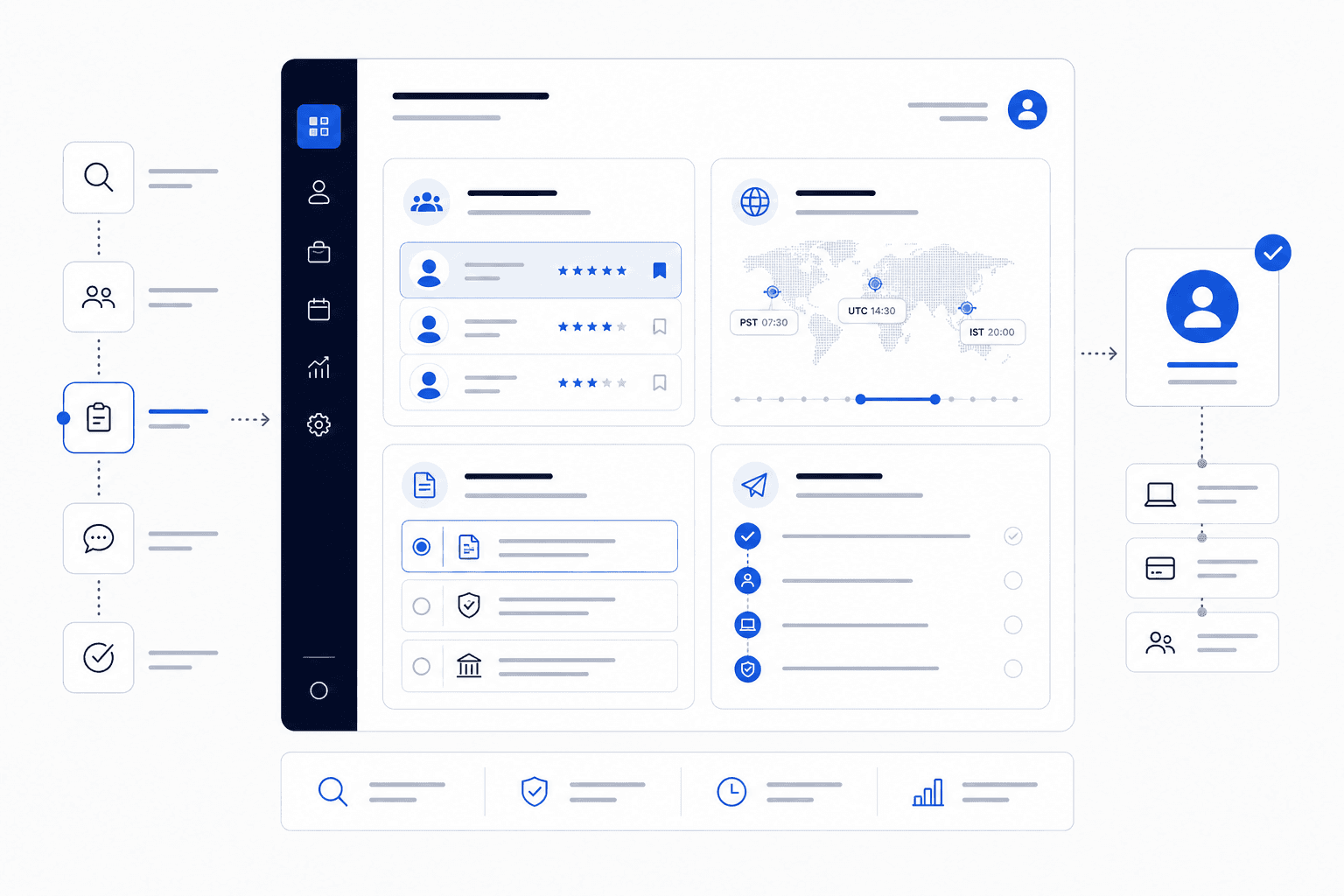
Record 10-minute Loom videos explaining what you need (e.g., “Week 1: Here’s how we do keyword research”).
They watch it in the evening, reply via Slack with questions or their completed task, and you review it the next morning.
The Right Tools Make This Seamless
Loom or Screenity for screen recordings. One employer said feedback loops meant SEO errors got fixed overnight while they slept.
Notion or Trello for tracking progress. Mobile-friendly boards and checklists work well.
ClickUp or Asana can automate progression: “Complete SEO module → unlock next task.” One remote worker hit a 100% completion streak and productivity jumped 40%.
Zapier handles notifications automatically. Set it up once, forget about it.
Step 4: Build Skills Through Real Work, Not Just Theory
McKinsey’s research shows 80% retention when people practice what they learn. Reading about SEO? Maybe 20% sticks. Doing actual SEO work while learning? That’s when it clicks.
A Weekly Structure That Works
Monday–Wednesday: 15-minute training video plus immediate application to a real task (e.g., “Watch this video about title tags, then optimize these three blog posts”).
Thursday: Quick 15-minute review call or async Loom if schedules don’t match.
Friday: Check metrics together using Google Search Console (free to set up).
Integrate Learning Into Daily Tasks
The smartest employers don’t separate “training time” from “work time.” Assign tasks that teach: “Optimize this blog post using what you learned about keyword density.” Every task becomes a mini-lesson and produces business value.
Step 5: Measure What Matters, Not Just Completion Rates
Forget “Did they finish the course?” Ask: “What changed?”
Metrics That Actually Matter
Site traffic and keyword rankings (Google Analytics / Search Console) — compare month over month.
Task speed. If keyword research took two hours before and 30 minutes after training, that’s a win.
Output volume. How many blogs are getting optimized per week now?
One study found SEO-optimized job postings yield 30% more applications. Upskilled teams see results in 20–30 days, not months.
Motivation Strategies That Don’t Break the Bank
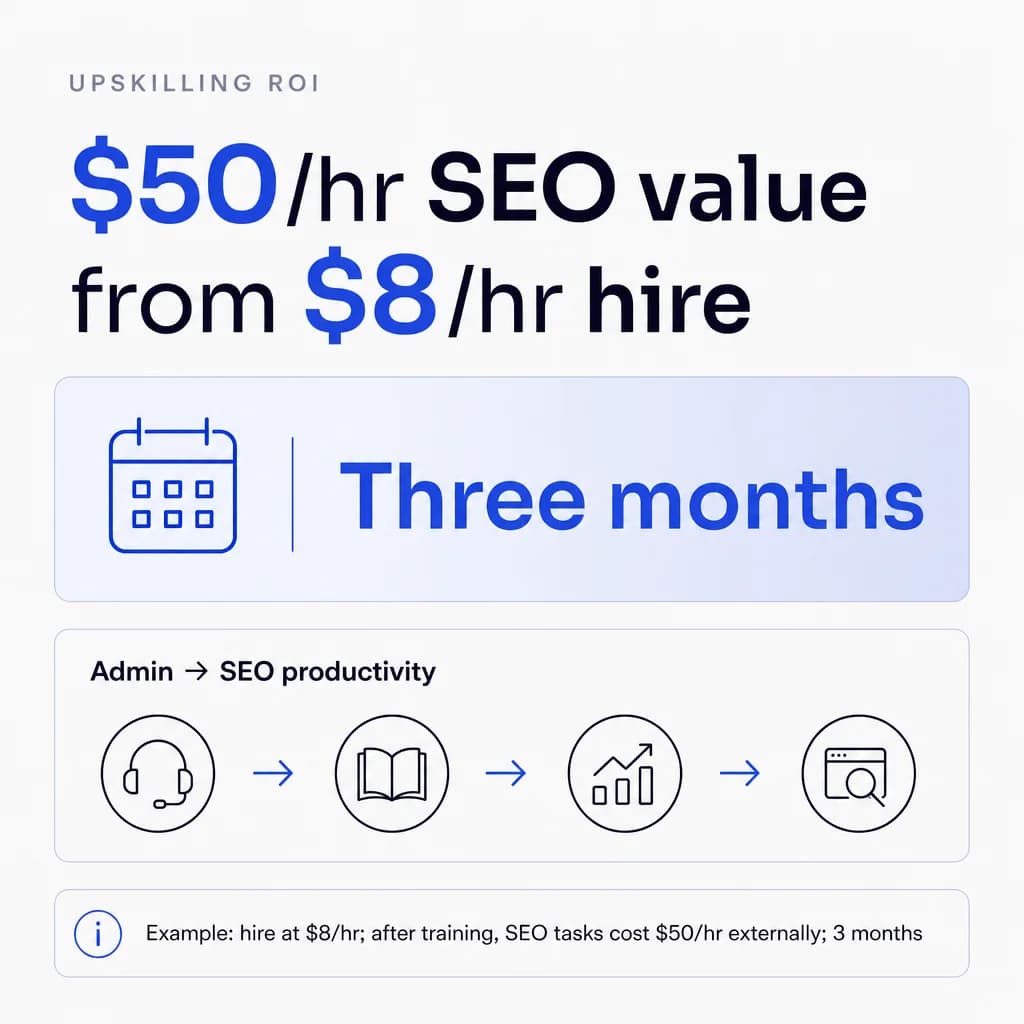
Monetary incentives: $50 bonus after certification, or bump project rate from $8 to $12/hr for SEO work.
Non-monetary motivation: Write testimonials for their portfolio or change their title to “SEO Specialist” in communications.
Why This Creates Long-Term Loyalty
Filipino remote workers stay loyal when they see growth opportunities. One said: “My boss trained me for free, now I earn double on my own client projects.” When your remote workers become more valuable in the market because of your training, they remember who invested in them first.
Common Problems and How to Solve Them
Don’t dump 40 hours of courses on someone. Start with one tool per week. Master Ahrefs before moving to SEMrush.
One tool, one skill, one week. Then move forward.
Send a 10-minute video reviewing basics and use quick assessments to check retention.
The biggest mistake is trying to train too fast. You’re not building an SEO expert in a week .
What This Investment Actually Costs
Budget $100–$200 for tools and courses per person. Many excellent resources are free (Ahrefs Academy, Google’s guides, HubSpot’s course). Paid options like Udemy run $10–$20. SEMrush or Ahrefs trials are free for 7–14 days.
The return? 5–10x easy. Better rankings mean more traffic, more leads, and more revenue.
Compare This to Hiring an Agency
An SEO agency charges $50–$150/hr for work your trained remote worker can do at $10–$15/hr. Even if you pay them $15/hr after training, you’re still saving 70–90% compared to agency rates.
Finding Remote Workers Ready to Learn
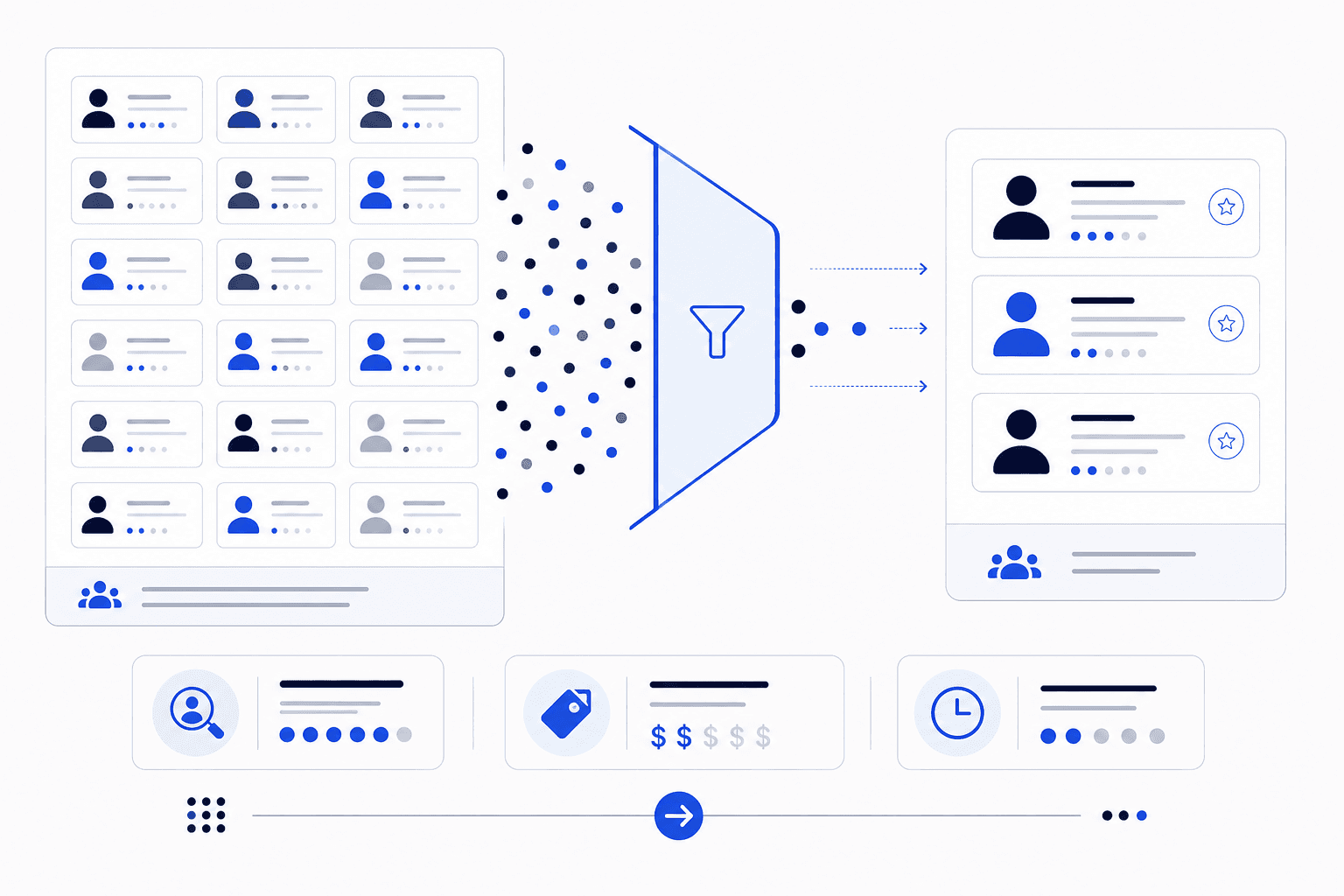
When hiring Filipino remote workers, look for people who are trainable from day one. HireTalent.ph lets you filter candidates by learning aptitude and technical skills before interviews. You can see who’s completed certifications or shown interest in digital marketing — cutting your training time in half because you start with people who want to learn.
Your Action Plan: Start This Week
Pick one resource. Ahrefs Academy on YouTube is free and excellent.
Assign one 15-minute task: “Watch this video about keyword research, then find 5 keywords for our industry.” Review tomorrow. That’s how you start.
Week One Checklist
Send skills assessment Google Form
Review responses and identify starting point
Choose one training resource (recommend Ahrefs Academy)
Assign first 15-minute video + application task
Set up shared Notion or Trello board for tracking
Schedule 15-minute review for end of week
What Success Looks Like in 30 Days
After one month of 20–30 minutes daily training integrated with real work, your remote worker should be able to:
Conduct basic keyword research independently
Optimize blog posts for target keywords
Understand fundamental on-page SEO principles
They’re not an expert yet, but they’re doing work that has real business value.
The Bottom Line
No disruption. No halting work. No complicated systems. Just small, daily progress that compounds into real expertise.
Your remote team will thank you with results, not just completion certificates.
The employers who win with remote teams aren’t the ones who hire the cheapest workers, they’re the ones who hire affordable workers and make them incredibly valuable through smart, non-disruptive training.
That’s the strategy. Now go execute it.